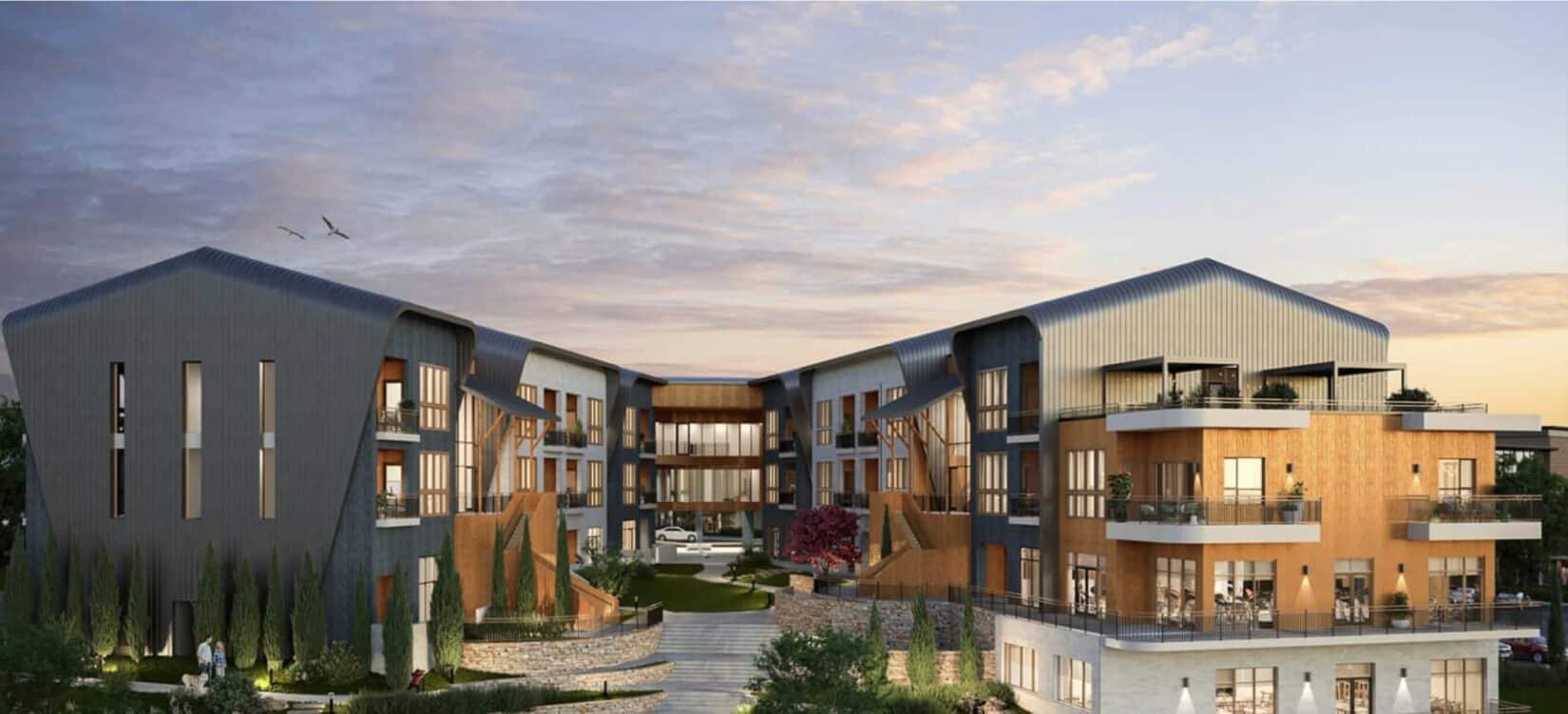

At DKLEVY, we’re deeply invested in the senior living industry. From designing innovative housing solutions to attending top conferences, we’re passionate about creating spaces that honor the greatest generation and improve the quality of life. Recently, we spoke with Daniel Levy, Co-Founder and President of DKLEVY, and Rodney Calvin, Senior Project Manager and Registered Architect at DKLEVY, about emerging trends, design strategies, and the future of senior living communities.
Understanding the Demand for Senior Living
Rodney:
Here at DKLEVY, we are really invested in senior living. We do a lot of senior living housing design, and we just came back from an awesome conference in senior living. But with us being so intertwined in this industry, can you talk more about the new trends? Kind of like what the future of senior living is going to be, and how much demand there is for that housing type out there right now.
Daniel:
Yeah, that’s a great question. I think it’s on everybody’s mind as we have loved ones, and we all just really see the need around us for great senior housing, and really wanting to honor the greatest generation that has come before us. And so we really see it as a passion project more than anything, that we get the opportunity to design these buildings. And there’s so many different flavors of senior living, whether it’s from the aging in place kind of model or active adult or a health event that leads to needing more specialized care. And so I think each aspect of the continuum has its own opportunities and challenges. But I think as a designer, we really look at it through the lens of where would we want to live, what kind of spaces and amenities would we want and we thrive in? And I think creating those kinds of options for seniors is really critical. And so, looking at connection points, looking at amenity spaces, seeing how we can pull the outside community into those buildings is really whether it’s just the industry trend in general is, I think, a positive one. And so that seniors don’t feel so isolated.
Evolving Housing Preferences
Rodney:
That’s true. And I mean, it sounds like what’s going on now is there is a really big shortage of senior living housing out there right now. Can you speak more to that and what housing types we could probably see more of in the future? And I know it largely depends on the acuity of the patient and the people that are living there. But, if you can, talk more about that.
Daniel:
I think as people are looking for lifestyle changes and you’re looking at downsizing in some ways, but upsizing and others. So you may be downsizing in your garage space and putting the lawnmower away, but you may be picking up pickleball or bocce ball or performing arts. So I think with senior living, we still see that people want bigger units, two bedroom units are really popular. We’ve even seen projects where, maybe a one bedroom isn’t leasing as well. So they’re opening it up to the community and having some younger folks move in to that community and be a part of the senior living group. And positive interactions between the intergenerational models start to work. It’s just neat to see all the creative amenities that are happening in these communities, to keep dignity and again, the options that we all want. If you’re a woodworker, you still want to be able to do woodworking wherever you go. So to provide those kinds of woodshop experiences, maybe there’s woodturning or if you’re a musician and you like guitar and that you play it all the time pretty loud. So yeah, maybe there’s a sound booth or a music studio at the Performing Arts Center within the community.
Rodney:
And really good, insulated units.
Daniel:
That’s right. Some of the things that we like to think about are: what community are we going into and how can we make that an engaging community? So maybe we’re next to a public park and we can have a really good ice cream shop or coffee shop inside of our building where the kids want to hang out. Maybe we’ll put some turf areas outside the building next to where people want to be. So we create spaces where people want to be, and those communities tend to thrive.
The Architect’s Role in Programming Senior Living Spaces
Rodney:
I think too, just from that, it’s just important for us architects to know on the front end how to help program these buildings. Can you talk more about our role in the design process and helping operators and clients to get the best facility, for not only the housing type they’re trying to provide, but also for the quality of life for the residents?
Daniel:
Yeah, it’s a great question. I mean, I think as the designers working with the team, every project is so team focused. And we’re in partnership with the developer and the operator and all the stakeholders, including the residents. We want to make sure it’s successful. And so we see a lot of opportunity when we lay out a space, especially with dining options, right? You may create what is initially a really cool concept, but it requires five more full time employees to run and it becomes impractical. So we have to look at the design. How can we start merging and blurring the lines between different spaces and have a lot of overlap there so that they’re functional to operate, as well as beautiful spaces that people want to enjoy and hang out in. And again, it goes back to the variety. Just having one big, open bowling alley dining room is not where you and I want to go every day. Sometimes we want to go to a quiet coffee shop. Some days we want to have a little bit of a bistro experience, and then other times the fine dining.
Rodney:
Well in addition to that, I think about, too, not just the spaces themselves, catering to just the residents or the family members, but how these communities can actually help meet the needs of the people living there, the people that are the family members of those people living there and also of the staff, and how that kind of starting to look like more of a trend in order to blur the lines there a little bit. So maybe staff can use some of the facilities that would make them want to be there and not feel as if it’s just a job. Like they actually enjoy being there and being with the residents. And the same thing with family members; how important it is for them to feel comfortable.
Daniel:
Yeah. I mean, I think the staff in these communities are incredible and they really are the hands and feet that go out and love on our residents. And so it’s something that we want to think about as designers: what spaces are we creating for the staff? And sometimes it is a quiet garden space or a courtyard that they need just to kind of recharge, you know? And other times it’s highly interactive like a fitness experience where they can have a membership to it and a pool, and be able to enjoy it.
It’s a delicate balance because I think there’s so much energy and effort that goes into caregiving that I can’t even pretend to know what goes into it. But sometimes you just need a little bit of a break from that. And so I think as we think about our buildings, the staff lounges, as places of retreat, are important to design into the building as well.
Rodney:
One thought from the conference we just attended. I think it’s also really cool how they were catering to the family members of the residents a lot, too, and helping them build a community together, instead of just being singularly focused. And I think that that was really important and where family members were in the garden with the residents that live there, their loved one, and they’re spending a lot of time there versus just a little time and feeling more obligated.
Daniel:
Again, that gets a little bit back to bringing the outside in and creating those amenities, but also those breakout places where you can have a small party or dining experience or recreation, or a cool movie room or something that the grandkids get excited about. What would it be like if the grandkids were asking, can we go see grandma today or something like that? So, yeah, those are the things that we really want to make sure that we have the opportunity to design into the spaces.
Choosing the Right Senior Living Model
Rodney:
So, Daniel, what kind of questions should developers be asking architects that they maybe don’t think about as much?
Daniel:
Well, I think with any project being successful from the get go, you have to have alignment with your architect and owner and operations team. And I think it’s important to know, where are we headed with this project? What are the overarching goals and what kind of care are we providing and what needs are we going to be meeting? So right now in the industry, we’ve all heard about the silver wave that’s coming and the amount of seniors that are coming into an age where they need this level of care. There are different challenges than ten years ago when it could be financial reasons and affordability, higher levels of care that are needed. And so I think it’s important to know what the different flavors of senior living are, what market are we trying to capture, and how can we do that to the best of our abilities? I think a lot of times someone will come to us and say, “I want a senior living building,” or “I want to get it licensed, or maybe I’ll do dementia care.” That building is going to be open in three or four years from when we get started, but how’s that building going to be ten, 15 years from now? What are the goals this community will achieve at the end? A lot of times it can be short sighted and how we think about projects. But yeah, I think as far as questions that they would want to ask us or that we would want to ask them is just, how can we align with the goals that you have?
Designing with Residents’ Feedback in Mind
Rodney:
Daniel, have you ever had residents’ feedback after the fact that maybe changed the way you looked at designing senior living in the future?
Daniel:
Some of the most powerful feedback or experiences that we can hear about is how our buildings are being used. Either it matches some of the intent, or maybe it’s being used in a more creative way than we even envisioned. When we spend time in some of our existing buildings, we see those opportunities it wants to emulate or wants to improve on. So, we have gotten very positive experiential reports from connections to nature. Whether it’s a courtyard space or a private balcony, or really just providing those view corridors, most of our residents want to be connected to nature, have the ability to go outside and experience that and not lose that freedom. And so that’s probably one of the better feedbacks that we’ve gotten – is those opportunities. I mean, we really see that as part of our mandate – connecting people to the things that God has made. And so having that opportunity to see the sunset, experience the breezes, and see the beauty of creation, is really impactful in how we approach design. So, we’re always going to be fighting to add more windows and to add more opportunities for those garden spaces and we love getting feedback that people are enjoying them.
Rodney:
I know that at DKLEVY, you’ve designed many communities that have memory care as well. Have you designed any communities that produced even better outcomes, to where people actually get better and no longer actually have to be at these communities?
Daniel:
That’s obviously some of the best feedback we can get. We have a community in southern Tennessee that we’ve gotten great feedback and testimonials about improved health outcomes. That particular community was a neighborhood type community with small intimate care settings, very family-like atmosphere, much like you’d have in your own home, surrounded by friends. But also, it had that key component at the heart of that building – the healing garden, the prayer garden. It was a place you could go to hear the birds, sit on a bench in the shade, and have the opportunity to experience God’s creation. It was cool to hear that there was a resident there that actually had a better health outcome than when they went in, and they were able to go home.
Rodney:
Just thinking about that in general, different community types, that’s where a developer is asking a question like, “if I want to have a senior living community, what type of building should I do?” Can you speak to that a little bit more? And just how important your role is to help determine that? Whether it’s looking at just the historical aspect of what has been working, or this is some new design or science in a way, to move into more of that neighborhood model type, and just how your experience goes along with that?
Daniel:
We certainly know when I say that we’ve got it all figured out or there’s a set way for every project. So it’s a team approach on every project where you look at market studies, demographics, and the demands and needs of the community that we’re going to look into. And then we try to find opportunities to, again, through the lens of honoring our seniors, to provide those experiences that maybe the community is lacking – and then we bring it all together. If there’s a need for dementia care, and maybe there’s a need for another villa type product, or there’s a need for multifamily or even some services, we’ll look at providing more of a campus model if the site allows. There are so many different lenses that we look through, whether it’s the zoning and planning lens or the demographics of the community and affordability lens. Or it could be a need that is unmet in that particular community. So again, it’s a lot of people coming together – a lot of information coming together. And then it’s through the lens of experience that we deliver a great product for our clients and residents.
DKLEVY’s Commitment to Senior Living
Rodney:
Well, Daniel, it is evident that DKLEVY is very passionate about senior living and helping the community and clients.
Daniel:
We love it. And we’ve done over 150 projects in 16 different states and thousands of units. But each day, it’s motivating to be challenged by, “how can we do this better?” We’re constantly learning and constantly improving with the motivation of honoring our seniors. So, we are excited about it each day.
DKLEVY’s approach to senior living design goes far beyond creating buildings; it’s about shaping experiences and enhancing the quality of life for residents, families, and teams alike. The DKLEVY team is helping to define the future of senior living: one space at a time, one resident at a time. Contact us today to partner on your next project.