
 Architects play a pivotal role in shaping projects from concept to completion, with their expertise significantly influencing both design and cost. Understanding how and when to involve an architect can save time, reduce expenses, and maximize the potential of a property. From selecting the right site to value engineering and working collaboratively with contractors, architects bring experience and creativity to ensure the best outcomes for their clients. Join Daniel Levy and Rodney Calvin as they explore the various ways architects add value to projects, emphasizing their role in balancing aesthetics with budget and navigating challenges to deliver exceptional results.
When to Involve an Architect in Your Project
Daniel: Well, Rodney today we’re talking about a topic that is near and dear to almost every client we have. A lot of what we do impacts the bottom line of our clients. And so, we are a service business that gets our fees that are based on a variety of factors. But I think what most of our clients struggle with is when to hire an architect or when to make the decision to move forward with a project and start outweighing cash into a project. We’re going to talk a lot today about value-add cost savings, how to make a project happen in the difficult environment that we’re in. But I think initially it’s like, when do I bring that architectural partner on board? And how is that going to affect my bottom line? So why don’t you talk a little bit to us about when is the right time for an architect to be involved in the project?Rodney: Well, I think from the very beginning, whenever they’re looking for a property, we can add a lot of value and make sure that property is ready for that type of use. So on the front end, knowing what the zoning is, and then also trying to see what their goal is for the property or what actual use it’s going to be. And then once you get past that stage, then working through the design process for the concepts, the schematic design to know exactly what they’re looking for and trying to tease out the things that are most important to them, because otherwise it can easily get to be a very bloated design to where it’s just, going to be more expensive in the long run. But if the architect can help tease those ideas and goals out on the front side of the project, then they’re going to save time and money later on. Because once you get through concepts and SDs at the beginning and we help them get to that point, then a contractor can look at it and we can see how close we are. And then from there we can then get to the actual design further in design development construction documents. But it’s very important on the front side of the project to have those steps and ideas kind of already laid out. And sometimes we get involved too late, and then we’re backtracking and trying to save money by just cutting things out of a project.
The Value of Architects in Site Selection
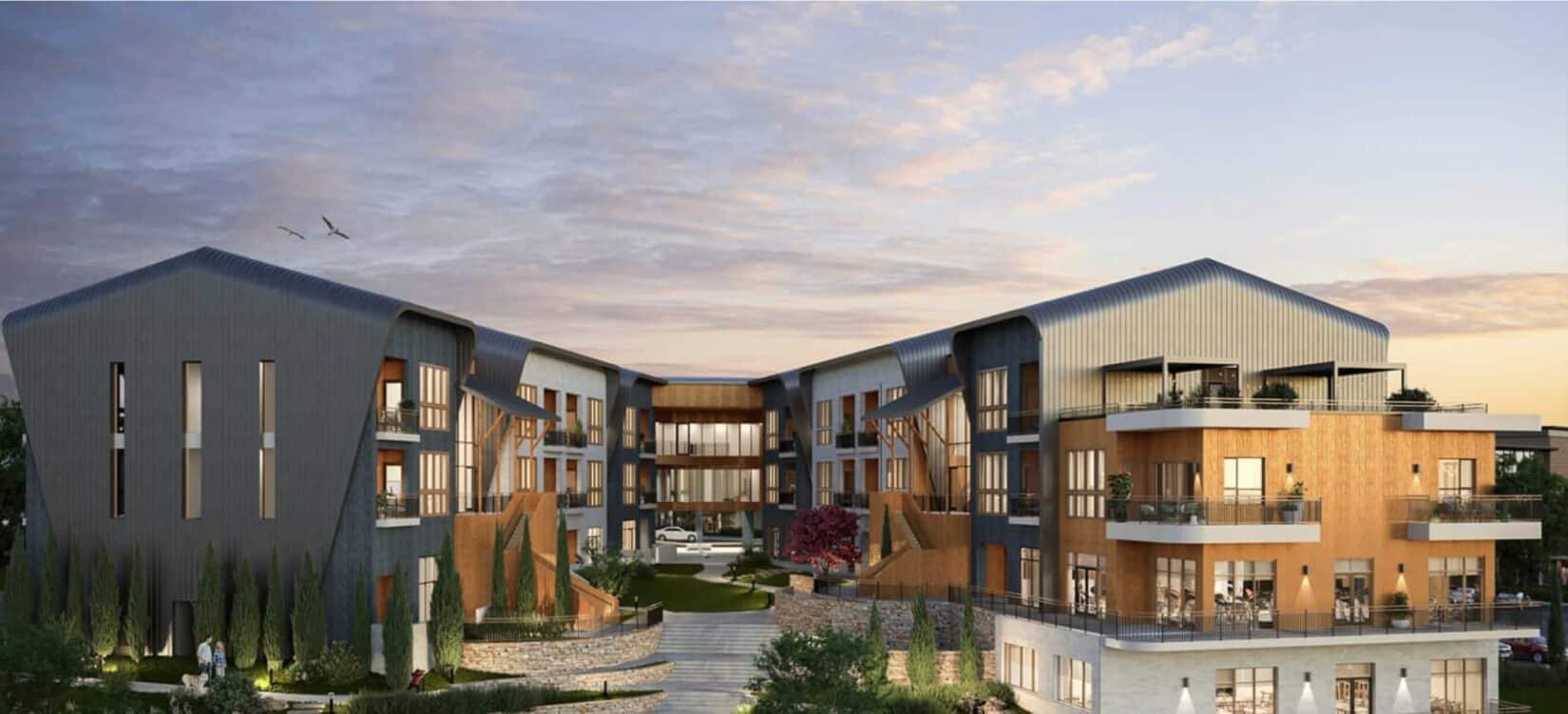
Daniel: I think experience comes with so much; you hear a lot of experiences as just relaying your pain points that you’ve had. And for us, as architects, as you know, we have had some painful lessons and things. But I think some of the value and site selection, you may have a site that, oh, this is a great fit. It’s zoned for multifamily or senior living and it’s ready to go. But once you really start looking at it and you realize you’ve got $5 million in retaining walls to make that site work, it might have the right density. Then all of a sudden the value isn’t there. So, walk us through. I’m thinking of a particular project that you have downtown, where you came in and the client had an initial idea for some townhomes, and then you looked at it through the lens of what was allowed per zoning and the best use of the land. You got yourself familiar with the area and how you added value, and ultimately impacted the bottom line, really from a site master planning and entitlement phase. Not even so from how the building was constructed.Rodney: Yeah. Originally the project had mainly townhomes. And we did the concept for that. But really, that wasn’t the highest and best use of the property. And looking at the potential for the location, which is near the South Waterfront, trying to figure out the best use for the amount of land that was there. Now, the property had some hilltop protection issues largely because of the location and it being so close to the South Waterfront, it really lent itself to have more of a higher density building, essentially. You’re close to a lot of amenity spaces. So, it was really a no-brainer to try and look at it from more of a multifamily scenario versus just a townhome layout. And so we were able to look at that and get a lot more units, a lot more beds. And so we can actually move forward then from that perspective. And we did have to look at changing the zoning in that particular project, but that is kind of once we noticed that that was probably the best way to do it, we went ahead to move forward with the rezoning process.
Design Impact on Cost
Daniel: Yeah. I think that’s such a great case study because, I mean, I even think about the original ask from the client, which was a rezoning anyway, and it was going to give them 40 residents and you returned to 10X on that. Now you’re gonna have 400 residents there. And that was, again, through your experience and adding value of what could be done. And what is the best value? I think that’s it just goes to show some of the ownership that you take and that we take as a firm as far as thinking of the project as if it was our own dollars that we’d be spent, how would we want to spend it, and what kind of returns are possible and also a good community asset.As you get a little bit further, maybe through entitlements, it’s rezoned, there’s a concept of hey, we’re going to do 400 apartments here, or we’re going to do senior living here. What is the kind of the next layer that starts impacting cost for our clients?
Rodney: We start to get into more of the design aspect of the building, but also, parking is one of the biggest things that kind of affects our layouts on the site. So now that we have an idea of where we want our building to be located, some of the amenity spaces, we can then kind of hone in on the sizes of those spaces, the finishes or whatever on the outside, but more, how it’s addressing the street, how it interacts with the parking a little bit better. We just get more in detail of the design and so we can then start to get just a better idea of what it’s going to be able to handle.
Balancing Aesthetics and Budget
Daniel: Yeah, I’m gonna pick on the Taj Mahal because it always gets brought up at this kind of phase, when we start looking at initial concepts. But when you’re starting to think about, “oh, I’ve got a site, I can do 400 units here, you can build a glass tower, you can build any kind of structure you want.” How does experience come into play when you’re thinking about historical data points that you draw from as you’re laying out a building?
Rodney: I think part of it is just knowing the market in a way, and knowing what’s more readily available to be built with, building materials, what makes the most sense to build it out of. So we’re not going to start off with a glass tower. We’re going to start off with frame construction and take it from there. And then, yeah, we might have, as architects, we want to design something that’s very aesthetically pleasing. So we might start off with some more interesting materials, say more brick than what we would end up with. But I would think at least we can come to a compromise there. And we just work through the design process. It’s very iterative, where we need to start off with something, and then we just keep refining, keep refining, keep refining, and then we get to something that makes the most sense. But we never start, we don’t want to start off with the most expensive. We kind of already know what is commonly built for a certain price at that time.
Architect Relationships with Contractors
Daniel: How do relationships with contractors come into play when we are in a really a series of years where pricing has kind of been all over the map, whether it’s now tariffs or supply chain issues or just a demand on the subcontractor base. How does an architect bring value into that relationship?Rodney: Just having the relationships with the contractors upfront. We know a lot of people, we know a lot of contractors, and we’re not afraid to talk to all of them. We can get good numbers and feedback, with specific contractors in our area or around the different areas that maybe these projects will be built. Whenever you have a good relationship with a contractor, then you feel more comfortable reaching out to them. They’re more comfortable giving you more specific numbers. And they also help on the front end then to come up with a range and we can be comfortable in what they’re telling us.
Daniel: Yeah. I’m thinking of a project that you’ve been working on that’s a waterfront community. Amazing views out to the lake and really created some cool spaces that were also expensive. And you got challenged by the current pricing of the project and the owner: Can you take 20% off this project, and keep the integrity of the design? Walk us through the process of how you achieve that and where the product’s going.
Rodney: Well, with this particular project, yeah, we designed what I feel was what the client wanted upfront. And I don’t think it was overly done in that respect of what it looks like or the layout. But him asking from a purely cost standpoint, we just went back and looked at it and we were able to just basically squeeze the building a bit, just cut here, cut there. It didn’t really take away from the design whatsoever. It probably added to it in the end, where we maybe shrunk the building footprint a little bit, pushed and pulled some walls, and then we got to the square footage that they were looking for without removing any of the finishes or just being able to say, hey, now this instead of having these units touching, we separate them by shrinking the footprint so they’re no longer building a firewall in between. And there’s space between them, which is better from a sales standpoint anyway. And a resident would rather live in their own single family home, not touching another single family home. And so then there’s better sound implications. So it kind of just made the most sense once we got into it just shrank the footprint, and now we have separate homes instead of townhomes that are touching.
Value Engineering and Problem Solving
Daniel: Yeah. You brought up a really good point, which I think is really interesting. When a designer is challenged to reduce or VE as you know, a lot of what it’s called to value engineer something, we tend to think, oh, this product is going to get worse, but you indicated that as you went through the exercise and the creativity and the problem solving, the project actually got better. I think of the developer that’s trying to check a box and put a fitness room in and it’s in the basement and nobody ever uses it. That’s not a value. That’s expensive equipment, that’s expensive space, but it’s not an asset. So to think of how you can create spaces and problem solving of VEs, but actually end up with a better result is like a huge win for everyone. And so kind of walk us through just the problem solving nature of value engineering and how to bring value to a project and something like that.Rodney: Well, after we get to that point where we have something to start with and we find that it is slightly overbudget or it’s just not where the client wants to be, a lot of the times the first thing that happens is, hey, what can we just simply remove? Which is the first thing: hey, can we eliminate windows? Can we eliminate doors? Change the elevations or floor levels? And I think where we can bring a lot more value is kind of just like that project we were talking about. Let’s not start there. Let’s start where we can maybe eliminate a little bit here and there from a footprint standpoint, or maybe we evaluate the spaces? Is this space really needed? Is this space, can it be more of a flex space instead of just an open area that’s not going to really be used? And so you’re actually programming it a little bit, but, by tightening up with space, I’m thinking of just like, we have a foyer now. It was a larger space before, it was more of a lounge, but now it’s more of just the connector piece. It’s more narrow, but it allows you to just have a presence to come in. But see through the glass out to the pool and past the lake instead of that being a programmatic area to just hang out more and be not as used, it’s more functional as just an entry, and it eliminated square footage. So I think going through that process versus just eliminating all of the glazing is probably more beneficial. And I think it’s something that we value more.
Daniel: Yeah, absolutely. I think there’s so many different aspects. I mean you can have a beautiful design, even something as simple as we want a 20ft piece of glass here. And now we’re introducing a steel beam. The only piece of steel on the project. You have another trade coming in. It’s another subcontractor. That piece of steel is not just the cost of the steel. It’s mobilizing another sub. It’s another contractor, right? So thinking about, okay, if we are trying to achieve this 20ft piece of glass and it’s going to require steel, what are some other ways to achieve that? And then working through all those design opportunities and really embracing that for what it is and value not just being a dollar but also an experience
Rodney: When in that case too, sometimes it’s just as simple as changing the direction we’re spanning with our floor trusses. And maybe somebody wouldn’t really think about that, but we would,
Beneficial Value Exercises
Daniel: What has been a rewarding value exercise that you’ve seen where you get out to a project and you say, wow, I’m so glad we did this or didn’t cut that, but maybe we saved some dollars in a particular area.Rodney: Not to keep talking about the same project, but it’s always the one that
Daniel: Nobody will know. You can just get a different one.
Rodney: Okay. It’s a different project. But I would say it’s the one that does make you feel like at least you didn’t really compromise in the most important areas. And I think that project did like we looked at it from a very practical standpoint in order to save the money. And we’re still very happy, if not more happy with how it turned out. Now. I think a lot of the time we get kind of siloed because the design process is really long. So like a lot of the projects that are being built probably now that I’m on, I think they’re probably about as efficient as they could get anyway. But during that process, it could have been a two year long process. I don’t really recall specifically. That’s why I have just that one right now, because I’m working on it right now. But still trying to at least, you know, be the most efficient as we can. And, I mean, there are a few other projects that are in design. They’re not constructed yet. I can think of that just the back and forth and trying to save money, trying to get real dollars out of a project but not compromise the goal and intent of the design.
Unique Value-Adds in Specific Projects
Daniel: I think it’s a challenge, like a lot of people think of architects and I think of, oh, they’re going to be very expensive. But I think this is really the value-add—that we think through all these lenses. And I’m thinking of a particular project downtown. It’s a very historic building that everybody is familiar with, and we were challenged to make a hotel and their and their initial ask of us was, give us a pool on the roof. Well, there are several other hotels that have pools on the roof. And we knew it was going to be $2 or $3 million to make a structural frame to put that pool on the roof so it just seemed like we had an opportunity there. And so when we see those opportunities, we can just say, okay, we’re going to give them the rooftop pool. Or we could think about creating one of the town’s first, intimate spas, kind of like a Roman bath type experience. So I think some of the challenges that we face are really our opportunities to think about the project a little differently and bringing value and thinking it through those lenses can do that.The Future of Senior Living
Daniel: Rodney, it’s a great discussion. And I think there’s so much opportunity as architects, as designers to really be a part of the team that has the experience looking at all these challenges and finding ways to create exceptional experiences, but the realities of budgets and costs and things and find ways to really bring value and maximize those opportunities with a cost savings lens. And so, we’ve worked in 16 states and multiple countries and really think that experience and really one of our motivators is kind of those challenging opportunities to really solve it and create great projects and bring value to each one.Rodney: Here at DKLEVY we are really invested in senior living. We do a lot of senior living housing design. And, we just came back from an awesome conference in senior living. But with us being so intertwined in this industry, can you talk more about the new trends? Kind of like what the future of senior living is kind of, going to be, and,how much demand it is, for that housing type out there right now.
Daniel: Yeah, that’s a great question. I think it’s on everybody’s mind as we have loved ones and, we all just really see the need around us for great senior housing and really wanting to honor the greatest generation that has come before us. And so we really see it as a passion project more than anything, that we get the opportunity to design these buildings. And there’s so many different flavors of senior living, whether it’s anything from the aging in place kind of model or active adult or a health event that leads to needing more specialized care. And so I think each aspect of the continuum has its own opportunities and challenges. But I think as a designer, we really look at it through the lens of where would we want to live, what kind of spaces and amenities would we want and we thrive in? And I think creating those kinds of options for seniors is really critical. And so, looking at connection points, looking at amenity spaces, seeing how we can pull the outside community into those buildings is really whether it’s just the industry trend in general is, I think, a positive one. And so that seniors don’t feel so isolated.
Rodney: That’s true. And I mean, it sounds like what’s going on now is there is a really big shortage of senior living housing out there right now. Can you speak more to that and kind of like what housing types that we could probably see more in the future here? And I know it largely depends on the acuity of the patient and the people that are living there. But, if you can kind of, like, talk more about that.
Resident Preferences and Amenities in Senior Living
Daniel: Yeah. I think as people are looking for lifestyle changes and you’re looking at maybe downsizing in some ways, but upsizing and others. So you may be downsizing in your garage space and putting the lawnmower away, but you may be picking up, pickleball or bocce ball or, performing arts aspect of things. So I think with senior living, we still see that people want bigger units, two bedroom units are really popular. We’ve even seen projects where, maybe a one bedroom isn’t leasing as well. So they’re opening it up to the community and having some younger folks move in to that community and be a part of the senior living group. And positive interactions between the intergenerational models start to work. It’s just neat to see all the creative amenities that are happening in these communities, to keep dignity and again, the options that we all want. If you’re a woodworker, you still want to be able to do woodworking wherever you go. So to provide those kinds of woodshop experiences, maybe there’s woodturning or if you’re a musician and you like guitar and that you play it all the time pretty loud. So yeah, maybe there’s a sound booth or a music studio at the Performing Arts Center within the community.Rodney: And are really good insulation units.
Daniel: That’s right. Some of the things that we like to think about are: what community are we going into and how can we make that an engaging community? So maybe we’re next to a public park and we can have a really good ice cream shop or coffee shop inside of our building that the kids just want to come hang out. And maybe we’ll put some turf areas outside the building next to that that people want to be at. So we create spaces where people want to be, and those communities tend to thrive.
The Architect’s Role in Programming Senior Living Buildings
Rodney: When I think too, just from that, it’s just important for us architects to kind of know on the front end how to help program these buildings. Can you talk more about our role in the design process and helping operators and clients to get the best facility for not only the housing type they’re trying to provide, but also for the quality of life for the residents.Daniel: Yeah, it’s a great question. I mean, I think as the designers working with the team, every project is so team focused. And we’re in partnership with the developer and the operator and all the stakeholders, including the residents. We want to make sure it’s successful. And so we see a lot of opportunity when we lay out a space, especially with dining options, right? You may create what is initially a really cool concept, but it requires five more full time employees to run and it becomes impractical. So we have to look at the design. How can we start merging and blurring the lines between different spaces and have a lot of overlap there so that then, they’re functional to operate, beautiful spaces that people want to enjoy and hang out in. And again, it kind of goes back to the variety. Just having one big open kind of bowling alley dining room is not where you and I want to go every day. Sometimes we want to go to a quiet coffee shop. Some days we want to have a little bit of a bistro experience, and then other times the fine dining
Rodney: Well in addition to that, I think about, too, not just the spaces themselves, catering to just the residents or, the family members, but like, how these facilities can actually help meet the needs of the people living there, the people that are the family members of those people living there and also of the staff, and how that kind of starting to look like more of a trend in order to blur the lines there a little bit. So maybe staff can use some of the facilities that would make them want to be there and not feel as if it’s just a job. Like they actually enjoy being there and being with the residents. And the same thing with family members; how important it is for them to feel comfortable.
Daniel: Yeah. I mean, I think the staff in these communities are incredible and they really are the hands and feet that go out and love on our residents. And so it’s something that we want to think about as designers: what spaces are we creating for the staff? And sometimes it is a quiet garden space or a courtyard that they need just to kind of recharge, you know? And other times it’s highly interactive like a fitness experience where they can have a membership to it and a pool, and be able to enjoy it.
It’s a delicate balance because I think there’s so much energy and effort that goes into caregiving that I can’t even pretend to know what goes into it. But sometimes you just need a little bit of a break from that. And so I think as we think about our buildings, the staff lounges, as kind of places of retreat are important to get design into the building as well.
Rodney: One just from that conference that we were just at, I think it’s also really cool how they were catering to the family members of the residents a lot, too, and helping them build a community together, instead of just being singularly focused. And I think that that was really important and where family members were in the garden with the residents that live there, their loved one, and they’re spending a lot of time there versus just a little time and feeling more obligated.
Daniel: Again, that gets a little bit back to bringing the outside in and creating those amenities, but also those breakout places where you can have a small party or dining experience or recreation, or a cool movie room or something that the grandkids get excited about. What would it be like if the grandkids were asking, can we go see grandma today or something like that? So, yeah, those are the things that we really want to make sure that we have the opportunity to design into the spaces.
Questions Developers Should Ask Architects
Rodney: So, Daniel, what kind of questions should developers be asking architects that they maybe don’t think about as much?Daniel: Well, I think with any project being successful from the get go, you have to have alignment with your architect and owner and operations team. And I think it’s important to know, like, where are we headed with this project? What are the overarching goals and what kind of care are we providing and what needs are we going to be meeting? So right now in the industry, we’ve all heard about the silver wave that’s coming and just the amount of seniors that are coming into an age where they need this level of care. There’s different challenges than ten years ago when it could be financial reasons and affordability, higher levels of care that are needed. And so I think it’s important to know what the different flavors of senior living are, what market are we trying to capture and how can we do that to the best of our abilities? And so, I think a lot of times someone will come to us and say I want a senior living building and yeah, I want to get it licensed, or maybe I’ll do dementia care. That building is going to be open in 3 or 4 years from when we get started, but how’s that building going to be ten, 15 years from now? What are the goals this community will achieve at the end? So I think a lot of times it can be short sighted and how we think about projects. But yeah, I think as far as questions that they would want to ask us or that we would want to ask them is just how can we align with the goals that you have?
Resident Feedback and its Impact on Design
Rodney: Daniel, have you ever had residents’ feedback after the fact that maybe changed the way you looked at designing senior living in the future?Daniel: Some of the most powerful feedback or experiences that we can hear about is how our buildings are being used. Either it matches some of the intent, or maybe it’s being used in a more creative way than we even envisioned. When we spend time in some of our existing buildings, we see those opportunities it wants to emulate or wants to improve on. So, we have gotten very positive experiential reports from connections to nature. When we bring those moments of, whether it’s a courtyard space or a private balcony, or really just providing those view corridors, most of our residents want to be connected to nature, have the ability to go outside and experience that and not lose that freedom. And so that’s probably one of the better feedbacks that we’ve gotten is those opportunities. I mean, we really see that as part of our mandate connecting people to the things that God has made. And so having that opportunity to see the sunset, experience the breezes and see the beauty of creation is really impactful in how we approach design. So, we’re always going to be fighting to add more windows and to add more opportunities for those garden spaces and we love getting feedback that people are enjoying them
Improved Health Outcomes in Designed Facilities
Rodney: Well I know that at DKLEVY, too, y’all designed many facilities that have memory care as well. Have you designed any facilities that produced even better outcomes to where people actually get better and no longer actually have to be at these facilities?Daniel: That’s obviously some of the best feedback we can get. We have a community in southern Tennessee that we’ve gotten great feedback and testimonials about improved health outcomes. That particular community was a neighborhood type community with small intimate care settings, very family-like atmosphere, much like you’d have in your own home, surrounded by friends. But also it had that key component at the heart of that building, was the healing garden, the prayer garden. It was a place you could go to hear the birds, sit on a bench in the shade and have opportunities to experience God’s creation. And, it was cool to hear that there was a resident there that actually had a better health outcome than when they went in and they were able to go home.
Determining the Right Building Type for Senior Living
Rodney: Just thinking about that in general, like different community types, that’s where a developer is asking a question like: if I want to have a senior living community, what type of building should I do? Can you speak to that kind a little bit more? And just how important your role is to help determine that? Whether it’s looking at just the historical aspect of this is what has been working or this is some new design or science in a way, to move into more of that neighborhood model type, and just how your experience goes along with that?Daniel: Yeah. I mean we certainly know when I say that we’ve got it all figured out or there’s a set way for every project. So it’s a team approach on every project where you look at market studies, demographics and the demands and needs of the community that we’re going to look in. And then we try and find opportunities to, again, through the lens of honoring our seniors and providing those experiences that maybe the community is lacking, and then we bring it all together. And so if there’s a need for dementia care and maybe there’s a need for another villa type product or there’s a need for multifamily or even some services, we’ll look at providing more of a campus model if the site allows. So, there are so many different lenses that we look through, whether it’s the zoning and planning lens or the demographics of the community and affordability lens. Or it could be, just a need that is unmet in that particular community. So again, it’s a lot of people coming together, a lot of information coming together. And then it’s through the lens of experience that we deliver a great product for our clients and residents.
Conclusion
Rodney: Well, Daniel, it is evident that DKLEVY is very passionate about senior living and helping the community and clients.Daniel: We love it. And we’ve done over 150 projects and 16 different states and thousands of units. But each day, it’s motivating to be challenged by, “how can we do this better?” We’re constantly learning and constantly improving and, with the motivation of honoring our seniors. So we are excited about it each day.
Engaging an architect early in your project is more than just a step in the process; it’s an investment in achieving your vision while staying cost-conscious. Architects bring critical insights into site selection, zoning, design optimization, and cost management, ensuring projects align with your goals. Whether it’s enhancing property use, maintaining the integrity of design through value engineering, or leveraging contractor relationships, architects are essential partners in turning challenges into opportunities.
Ready to experience the difference an architect can make? Contact DKLEVY today to discuss how our expertise can help you achieve your design goals while optimizing costs.